
Negligence Law and Lawyers
from Specialist Lawyers
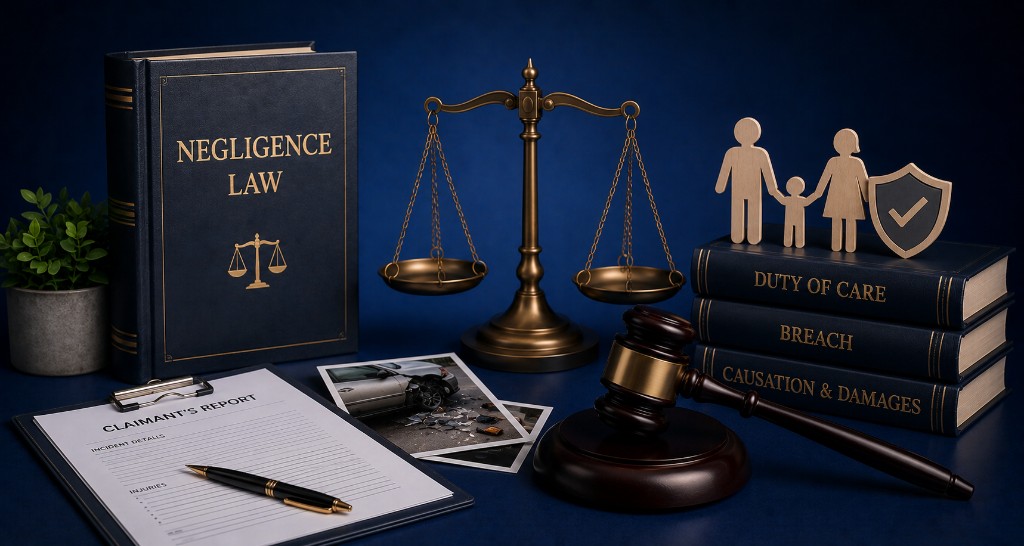
Negligence claims for injury and loss caused by another's failure to take care.
Negligence Claims
The law of negligence applies to many areas of the law. People can suffer from someone elses negligence at work, on the road, or in public. If you have been injured at work on the road or in public, please see our other legal areas, in particular, Workers Compensation, Motor Accident Compensation and Public Liability Compensation.
If you, or someone you know, has suffered due to negligence then please complete our free online legal enquiry form on the right, or click here.
Broadly speaking negligence claims can be broken up into the following two main areas:
- Medical Negligence;
- Professional Negligence; and
- Other Negligence Matters.
Medical Negligence
Medical negligence claims involve claims against doctors, dentists, hospitals, nurses and other healthcare and medical providers. For more information please see our medical malpractice page. Medical malpractice or medical negligence claims can involve the following claims:
- birth injury claims
- pregnancy and maternal injury claims
- spinal injury
- adult brain injury
- surgery claims
- cancer claims
- claims for misdiagnosis
- cosmetic surgery claims
- sports injury claims
- eye treatment claims
- claims against GPs
- accident and emergency claims
- inquests and claims following death
- hospital negligence claims
- dental/dentist negligence claims
- negligent nursing claims
- negligent medical advice claims
Professional Negligence
Professional negligence claims generally involve claims against professional workers and can involve claims for negligence against bankers, architects, surveyors, estate agents, solicitors, accountants, brokers, patent agents, trade mark agents, financial advisers, doctors, other healthcare professionals, auditors, auctioneers, computer consultants and any other advisor whose advice complained of was given in a professional capacity.
Generally speaking, the requirements for making a successful claim in negligence are:
- the existence in law of a duty of care situation (i.e one in which the law attaches liability to carelessness);
- there has to be recognition by law that the careless infliction of the kind of damage complained of on the class of person to which the claimant belongs by the class of person to which the defendant belongs is actionable;
- breach of the duty of care by the defendant (ie. that the conduct complained of fails to measure up to the standard set by law);
- a causal connection between the defendant's careless conduct and the damage;
- that the particular kind of damage to the particular claimant is not so unforeseeable as to be too remote.
When these 4 requirements are satisfied, the defendant is liable in negligence. Only then is it relevant to consider the assessment of damages, that is, the compensation for the damage for which the defendant is responsible.
If you, or someone you know, has suffered due to negligence then please complete our free online legal enquiry form on the right, or click here.
Negligence Law and Examples of Negligence
Negligence is the failure to use reasonable care. That is, negligence is measured against what a reasonable person would have done under the same or similar circumstances. This can include a wrongful act as well as not doing something. Negligence claims can range from someone not mopping up a spill on the floor to a professional not providing proper professional advice (also known as professional negligence).
If you are injured or have suffered damages because someone else acted in a negligent manner, you may have a cause of action, or a lawsuit, against the person who acted unreasonably.
Strict time limits apply for matters involving negligence. You should seek legal advice as soon as possible. So don't delay - complete our fast, free Legal Enquiry Form NOW!
Elements of Negligence
Apart from that already mentioned above, generally speaking, for negligence to be established, the plaintiff must be able to prove that:
- there was a duty of care,
- that this duty was breached, and
- that this breach caused the injury.
Forms of Negligence
There are many forms of negligence. Some examples of negligence can include, but are not limited to:
- a manufacturer breaching their duty of care by providing a defective and unsafe product. For example, a person buying a cereal box and finding glass in the box.
- a driver breaching their duty of care to drive safely on the road. For example, a driver running a red light.
- an employer breaching their duty of care to provide a safe workplace and ensuring the right safety measures are in place. For example, an employee injuring their back trying to lift a heavy box.
- the owner of a shopping centre breaching their duty of care to provide a safe place for you to shop. For example, a customer tripping over a broken tile.
- a doctor breaching their duty of care in providing the wrong medical advice and treatment. For example, a doctor prescribing the wrong medicine.
If you have been injured or suffered property damage due to someone else's negligence, then you are entitled to make a claim for compensation.
The purpose of compensation is to compensate you for the following possibilities:
- Loss of earning capacity
- Physical disabilities and medical problems both now and later on in life, when you get older
- Medical and hospital costs
- Attendant care and rehabilitation costs
- Damaged or destroyed personal property
- House and motor modifications to accommodate your injuries
- Dependant spouse and / or dependant children
- Other compensation entitlements, damages and loses
If you, or someone you know, has suffered due to negligence then please complete our free online legal enquiry form on the right, or click here.
Further Resources - Negligence Law and Lawyer
Additional Information 1 - Negligence Law and Lawyers
Additional Information 2 - Negligence Law and Lawyers
Additional Information 3 - Negligence Law and Lawyers
NEWS & FURTHER INFORMATION - NEGLIGENCE LAW & LAWYERS
NEGLIGENCE CLAIMS
In making a negligence claim, a person injured in an accident often alleges that the defendant was negligent in some respect, and that such negligence led to the accident and injury.
Courts may, from time to time, have put forward slightly varying versions of the legal definition of negligence but the basic idea is that a person is negligent if he fails to do something a reasonable person would have done, or if he does something that a reasonable and prudent person would not have done.
In real life situations, the law applies the concept of negligence together with the related concept of duty of care to resolve questions about who takes legal responsibility for an accident and injury.
What is Negligent Behaviour in the Eyes of the Law?
In systems of common law, the term ‘negligence’ is mostly used in connection with claims for monetary or financial compensation for physical or mental injuries suffered in accidents caused by careless or negligent behaviour on the part of others.
Negligence is not the same as carelessness, because a negligent person may in fact be acting with as much care as they are capable of exercising. Negligence is definable as the opposite of diligence in that it falls short of behaviour that a person could expect from another who would act to protect other people from foreseeable risks.
Through the legal procedure of making personal injury and accident claims, a person who has been injured can show that they were injured as the result of another person’s negligence. They are able to recover damages in the form of compensation from the negligent individual. This compensation can cover any injury or damage caused to the person; physical, mental or financial.
What are the Benefits of Hiring a Negligence Solicitor?
If you feel you have suffered or been involved in an accident that was a result of another’s negligence, you should consult a solicitor to find out if you are entitled to compensation. There are great numbers of specialist solicitors, independent, or belonging to a firm, who would love the opportunity to get you the money you deserve.
It is important that you find a solicitor who specialises in the area of negligence claims that your case falls into. For example, if you want to issue a medical negligence claim because your dentist overlooked the cause of the problem, you want a solicitor who is going to be able to fight for your case with expertise and experience.
Professional Negligence Disputes
Disputes about negligence in professional work environments are not as uncommon as people may think and are usually the result of improper conduct. They are often serious in nature and may result in litigation but it is always better if the dispute is setlled prior to court.
It is wise for a client who fears they have been given false advice or have been provided with an inadequate service, that they contact one of our professional negligence dispute solicitors, who is guaranteed to be experienced and knowledgeable in this area.
Important Concepts in Negligence Claims
Duty of Care
In Australia, people have a duty of care towards each other to ensure that people are protected from risks and injuries that could have been prevented. A duty of care exists between two people when the potential harm is deemed ‘reasonably foreseeable’ to the other person. There must be a close relationship between the two people and it must be fair and reasonable for the duty to exist.
Breach of Duty
Once it has been shown that a person had a duty of care towards another person it must be proven that the person has breached or neglected that duty. A person who causes harm to another by posing risks to other people and their property has breached their duty of care.
Burden of Proof
It is essential that the claimant is able to prove the other person’s responsibility in causing the problem and did truly demonstrate negligent behaviour.
If you would like legal help regarding a matter involving negligence, then please complete our free legal enquiry form.
Different Types of Negligence Cases
There are different types of negligence claims in the Australia. Each case is different depending on the nature of the complaint, the severity of the incident and who it involves. This page offers you information about different negligence claims and has links to other pages with more detailed information on each type of negligence claim.
Medical Negligence
In a case of medical malpractice or clinical negligence, it is required for the unsatisfied patient to demonstrate their Doctor’s incompetence through evidence. It is important for the judge to be able to compare the case to other Doctors’ proper conduct in order to ascertain whether the case and patient in question deserves compensation.
Professional Negligence
Professional negligence is definable as the type of negligence claim where a professional person, for instance, a Doctor, who leads you to believe they possess skills appropriate and expected for the specific role, when in actual fact they do not. Issuing a claim against a professional is simple if you find the right solicitor.
Criminal Negligence
Criminal negligence cases vary from case to case. There are minor criminal negligence cases, where an individual has been accused of being reckless to the extent of putting another’s life in danger without serious results. Alternatively, there are more serious negligence cases, such as drunk driving. Criminal negligence cases such as this could result in death and an individual could be charged with gross negligence.
Educational Negligence
Cases in educational negligence are not as common as the above negligence cases. This may be due to the fact that they are more costly and time consuming for both parties. It is desirable for a dispute involving an educational institution to be settled outside of court through a method of alternative dispute resolution (ADR). However, if the individual who feels they have been affected by the educational provider’s negligence, it is advisable to consult a specialist solicitor who will advise and guide you through making a claim.
Contributory Negligence
In a contributory negligence case, the individual who makes the claim for compensation is accused by the other party of being party responsible for the incident in question. This type of negligence case is common in road traffic accidents, where one party does not feel solely responsible for causing the accident.
If you, or someone you know, has suffered due to negligence then please complete our free online legal enquiry form on the right, or click here.
Negligence and compensation
Negligence compensation claims arise when someone has not taken the correct reasonable care. Negligence often proves to be the cause for personal-injury claims. If you suffer some sort of detrimental injury, you may well be entitled to negligence compensation. However, there are certain legal criteria which must be satisfied in order to prove negligence, and therefore receive compensation. If you have suffered an injury caused by the careless behaviour of another, you may be entitled to negligence compensation, and you will be more likely to succeed in your case with the help of a specialist solicitor.
The amount of negligence compensation depends on the injury which has been suffered. The amount will be determined by the amount of economic losses suffered, which may include potential loss of earnings and medical expenses as well as non-economic losses such as pain and suffering. As with most types of law, the case law relating to negligence is vast. Furthermore, there are many different types of situations in which negligence compensation may be available. Sports injuries, car accidents, medical-negligence claims and accidents at work are just a few of the examples.
Personal-injury lawyers who deal with claims for negligence must have detailed knowledge of the area and provide access to justice whilst ensuring they maintain the fairness of the judicial system. For this reason, it is important that if the situation arises where you may wish to claim negligence compensation, you obtain legal advice from a specialist personal injury solicitor.
If you would like to obtain legal advice on negligence, we can put you in touch with a local specialist negligence lawyer, free of charge. To requestlegal help regaring a negligence law matter, please complete your free legal enquiry form on the right.
TYPES OF COMPENSATION CLAIMS
If you have been involved in an accident of any description that was not your own fault and you have suffered a personal injury as a result, you may be entitled to make a personal injury compensation claim.
Whiplash Injury – Whiplash injury affects the tendons of the neck, muscles nerves and can cause a great deal of pain. If you have suffered whiplash due to a car accident whether you were the driver or the passenger you could be entitled to a substantial amount of compensation.
Back Injury – Back pain can be defined as acute or chronic. If you have suffered a back injury that wasnt your fault, you could be entitled to compensation.
Road Traffic Accident – What ever type of traffic accident you may have been involved in whether it is minor or more serious, you can obtain free impartial advice on whether to make a claim for personal injury compensation.
Crush Injury – A crush injury is when a part of the body is crushed between two on more objects. If you have had a crush injury that was not your fault then you could be entitled to make a personal injury compensation claim.
Construction Accidents – Most construction accidents that happen in the workplace could have been avoided if the company had followed the legal health and safety regulations. If you have had a work related accident causing a personal injury then you could be entitled to claim compensation.
Animal Attack Injury - If you have been attacked by an animal and sustained injury as a result, regardless of whether the injuries were either physical or physiological, you could be entitled to a compensation claim.
Car Accident - If you were injured as a passenger, pedestrian or driver as long as the incident was not your own fault, you should be entitled to claim compensation.
Motorcycle Accident - If you have been involved in a motorcycle accident, you were the rider or the passenger, as long as the accident was not your fault, you should be entitled to make a compensation claim.
Work Accident - Employers have the duty to make sure that their employees carry out the job function within a safe environment. Employers have to follow strict health and safety regulations. If your employer fails to comply with these regulations, your case for compensation will be much stronger.
Public Place Accident - If you have had an accident in a public place whether it was on an uneven pavement, footpath or in a public building like a shopping centre, swimming baths or restaurant you maybe entitled to claim compensation.
Slip, Trip or Fall - If you slip, trip or fall on an uneven pavement then your local council will be liable as they have a legal duty to make sure the pavement or street is in a good state of repair.
Head Injury - The personal suffering sustained from a head injury can be caused by a number of different circumstances like an assault or an impact to the head. Also the type of head injury can be from mild to severe. Providing that the incident was not your own fault, you should be entitled to claim compensation.
Medical – Medical Negligence is where an injury or death was caused by the negligence of a medical professional. If you or someone in your family have been injured or died, caused by incorrect medical treatment, then you or your immediate family may be entitled to make a compensation claim.
Types of accident compensation claims
To read more about our depth of knowledge and experience in dealing with your type of accident claim, please click on one of the personal injury claim types below:
Accidents at Work
We handle compensation claims for accidents at work, including assaults at work, accidents on construction sites, falls from heights and your rights when working whilst pregnant.
Asbestos Related Claims
Negligent exposure to asbestos dust and fibres can result in a number of asbestos-related diseases including mesothelioma, asbestosis, pleural thickening, and asbestos-related lung cancer.
Harmful Substances
Exposure to harmful substances can occur in both industrial and domestic situations, often affecting large numbers of people. Personal injury lawyers can help with claims for compensation following this type of injury, including those that can be brought by a group of claimants, known as class action claims.
Industrial Diseases
Industrial injuries, such as vibration white finger, dermatitis and industrial deafness, as well as the many forms of asthma and other respiratory conditions that can be induced by exposure to harmful substances.
Injuries at Work
We handle compensation claims for injuries at work, including assaults, construction site accidents, falls from heights and information about working whilst pregnant and your employers duty of care.
Medical Negligence
We handle all types of medical and clinical negligence injuries from those suffered during pregnancy and the birth of your baby, to negligence during surgical procedures leading to serious injury or even death.
Military Claims
Military Cliams can be complex and require specialist knowledge to ensure an accident claim is dealt with in the appropriate way. For example, “combat immunity” may apply if you are injured during active operations. However, you may still be able to make a claim.
If you were injured in a non-combat situation due to the negligence of a section of the armed forces, you may be able to bring a claim in the usual way. Personl injury lawyers have in-depth experience of dealing with these types of claims.
Product Liability
Product liability covers a number of areas of consumer law. It includes injuries resulting from defective products and faulty goods such as, Orthopaedic Aids and injuries caused by Pharmaceuticals such as allergic reaction to cosmetics. It also covers injuries caused by the failure of implants or products regulated by the Medicines and Healthcare Products Regulatory Agency.
Public Liability
Public liability relates to the duty of care that must be provided to protect members of the public against accident or injury by those responsible for the premises where the accident occurs. The types of accidents are many and varied, but may include slips, trips or falls in public places such as the public highway, public squares and parks or amusement parks.
Road Traffic Accidents
People injured as the result of a road traffic accident may include the driver, passengers, motorcyclists, cyclists, pedestrians, or several of these in the same road accident.
Serious Injury
A serious injury can occur as the result of any of the above listed personal injury claim types. In some instances, they can of course be fatal and personal injury lawyers have extensive experience in dealing with the families of those seriously or fatally injured to ensure they receive their rightful accident compensation.
If you believe you have a claim for compensation and would like a lawyer to help you, then please complete your free legal enquiry form on the right.
If you have suffered an injury in an accident, however major or minor your injuries, then you should consider the possibility of making a compensation claim at law.
Basically if someone (or something) else was, at least in part, responsible for your injury then you have a possible personal injury claim.
To find out if you can claim compensation due to someone's negligence, please complete free legal enquiry form on the right.
Any type of incident could give rise to a legal claim for compensation.
Some of the most common are :
• Accidents at Work
• Slipping/Tripping accidents
• Accidents in your car
• Incompetent treatment by a GP or in hospital
• Motorbike accidents
• Shoddy work by a dentist
If you believe you have a claim for compensation arising from someone's negligence, then please complete a free legal enquiry form on the right to request legal help from a compensation lawyer.
Personal Injury compensation claims include:
- Accidents in Public Places
- Asbestos Related Illnesses
- Claim Information and Accidents
- Hazardous Substances Claims
- Industrial Diseases
- Medical Negligence Claims
- Military Accidents
- Personal Injuries
- Product Liability Claims
- Road Traffic Accidents
- Serious Injury Claims
- Workplace Accidents
- Brain Injury from Medical Negligence
- Child Brain Injury
- Criminal Injury Claims
- Head Injury - Professional Negligence
- Head Injury Abroad
- Head Injury in a Public Place
- Head Injury at Work
- Head or Brain Injury from a Road Traffic Accident
- Military Head Injury Claims
If you believe you have a claim for compensation arising from someone's negligence, then please complete a free legal enquiry form on the right to request legal help from a compensation lawyer.
Most personal injury lawsuits are based on negligence. This is easily explained. Everyone makes mistakes, and mistakes often amount to negligence. Furthermore, many people are insured against their mistakes. They have automobile insurance and homeowner's insurance; businesses carry general liability insurance to cover such misfortunes as slip and fall injuries by patrons.
Certainly, people sometimes cause harm intentionally. As a practical matter, though, relatively few lawsuits result from intentional torts because insurance coverage is generally not available for intentional wrong acts. Automobile insurance and other types of insurance provide the "deep pockets" into which personal injury plaintiffs can reach for compensation.
Negligence is the Failure to Use Reasonable Care Under the Circumstances
The tort of negligence amounts to the failure to use reasonable care under the circumstances. The elements of negligence are:
•Duty - the obligation to use reasonable care to avoid injuring the plaintiff.
•Breach of duty - the failure to use reasonable care.
•Proximate cause - legal responsibility for bringing something about.
•Harm - actual loss or damage that results from the failure to use reasonable care.
Some torts, such as defamation, can be committed either negligently or intentionally.
Compensation for Negligence Means Recovering Money for Economic and Non-Economic Losses
A plaintiff with a negligence claim may recover compensatory damages—money intended to compensate for the actual losses suffered. Compensatory damages cover economic losses such as present and future medical expenses and costs of property repair. Plaintiffs may also recover for non-economic losses such as pain and suffering. Punitive damages, awarded over and above compensatory damages and intended to punish the wrongdoer, are not available for simple negligence.
Personal Injury Compensation for Intentional Harm
Intentional torts include such wrongs as battery, assault and false imprisonment. The intentional torts all have various elements, but they share the common element of intent. In a negligence case, the defendant has failed to conform to a particular level of reasonable care, thereby creating an unreasonable risk of harm. In an intentional tort case, the defendant either wanted to harm the plaintiff, or knew there was a substantial certainty that his or her act would harm the plaintiff.
Compensation for Intentional Torts Includes Compensatory and Punitive Damages
The plaintiff in an intentional tort case may recover compensatory damages for his or her losses. Additionally, because the defendant often acts with malice in committing an intentional tort, punitive damages are usually available. Many intentional torts are also crimes for which the government may prosecute the perpetrator.
Strict Liability is Liability Without Fault for Engaging in Inherently Dangerous Activities
Strict liability applies when a person is engaged in an inherently dangerous activity, such as using explosives or keeping vicious animals. A person who engages in such activities is subject to liability for any harm that results even if the person took great care to prevent harm from occurring. The plaintiff need not prove the defendant acted unreasonably or with the desire to harm her.
Strict Product Liability Applies to Defective Products
Strict liability may also apply in the case of defective products. The rationale behind strict product liability is that anyone who places a defective product into the stream of commerce - from designers to manufacturers of component parts to retailers and anyone in between - can be held liable if the product injures someone.
Compensation for Strict Liability
In a strict liability lawsuit, including a product liability lawsuit, a plaintiff may recover compensatory damages for actual harm caused by the defendant's dangerous activity. Additionally, punitive damages may be possible if the plaintiff can show the defendant acted with malice in allowing the injury to occur.
A plaintiff who believes he or she has a personal injury claim should contact a personal injury attorney immediately. Most jurisdictions place time limits on bringing a personal injury lawsuit.
|
These news come from Get Free Legal AdviceThere are strict time limits which may apply to your case — so don't delay, act today. Complete your free legal enquiry form to request immediate legal assistance. Free Legal EnquiryFree Legal EnquiryTell us about your legal matter and we'll connect you with a specialist lawyer in your area. |